Things to Do in Guadalest
Discover the Castle, Turquoise Reservoir and Beautiful Mountain Village
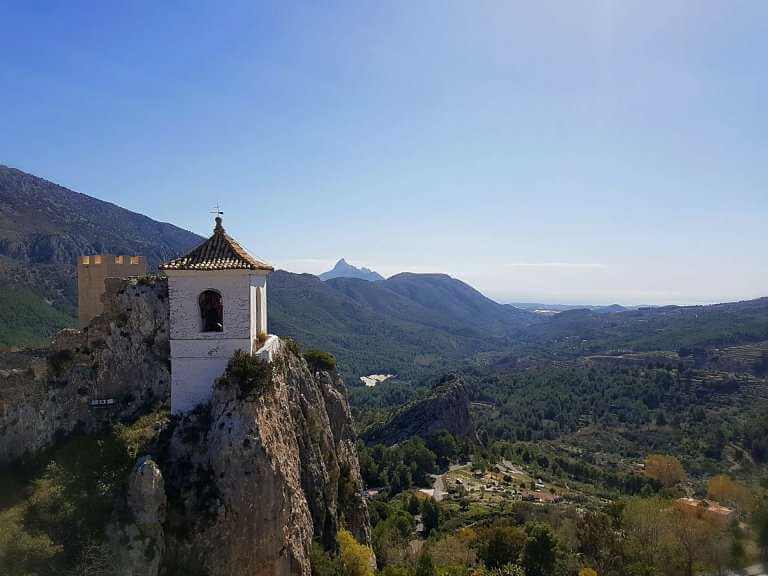
A centuries-old castle, charming narrow streets and spectacular views over a turquoise reservoir. Welcome to Guadalest, one of the most beautiful mountain villages on the Costa Blanca! Just over an hour’s drive from Moraira, you’ll discover a completely different side of Spain. The journey takes you through beautiful mountain scenery, traditional villages and orchards before arriving at El Castell de Guadalest, a historic village perched dramatically on the rocks. And once you see the reservoir surrounded by mountains, you’ll understand why this is one of our favourite day trips from Moraira.
Here are our favourite things to do in Guadalest, together with a few practical local tips.
1. The Scenic Drive from Moraira to Guadalest
Part of the pleasure of visiting Guadalest is the journey itself. As you leave the Mediterranean coastline behind, the landscape changes from coastal villages to winding mountain roads, green valleys and beautiful countryside. Around Callosa d’en Sarrià, you’ll notice plenty of fruit orchards. This area is particularly famous for nísperos, also known as loquats. These small orange fruits have a delicious sweet and slightly tangy flavour. You’ll often see the trees covered with protective netting.
Our tip: don’t rush the drive. The scenery along the way is part of what makes visiting Guadalest so enjoyable.
2. Guadalest Old Town – A Village Built into the Rocks
Guadalest may be small, but it’s full of character. As you walk towards the historic centre, you’ll discover narrow streets, traditional houses, little shops and attractive viewpoints. One of the most unusual features is the entrance to the old fortified village. You actually walk through a tunnel carved into the rock! Beyond the tunnel, you’ll find cobbled streets, historic buildings and spectacular mountain views. Take your time exploring. There are lovely little corners everywhere, and the views seem to become more impressive with every turn.
Our tip: stop for a coffee on one of the terraces before continuing towards the castle.
3. San José Castle – History and Spectacular Views
High above Guadalest stand the remains of Castillo de San José, the historic castle dating back to the 11th century. Built during the Moorish period, the fortress occupied an important defensive position overlooking the valley. Over the centuries, earthquakes caused extensive damage, leaving the impressive ruins you can visit today. But the real highlight? The views! From the castle area, you can admire the surrounding mountains, historic village and beautiful reservoir below.
Casa Orduña | Step Back in Time
To reach San José Castle, visitors pass through Casa Orduña, a historic residence that now serves as a museum. The house was built following the devastating earthquake of 1644 and belonged to the influential Orduña family. Inside, you’ll discover traditional rooms, antique furniture, paintings and other objects that tell the story of life in Guadalest centuries ago. You can then continue towards the castle ruins.
Our tip: allow enough time to explore both Casa Orduña and the castle. We particularly enjoy the panoramic views from the upper area.
Check the official Casa Orduña visitor information.
4. Guadalest Reservoir – The Famous Turquoise Lake
Perhaps the most memorable sight in Guadalest is the stunning Embalse de Guadalest. This reservoir lies deep in the valley, surrounded by beautiful mountains. When the conditions are right, its water has an extraordinary turquoise colour that contrasts beautifully with the landscape. You can admire the reservoir from several viewpoints around the village, especially near the castle. It’s one of those places where you’ll probably take far more photographs than you intended!
Our tip: the colour and water level change depending on rainfall and the time of year. Whatever the conditions, the surrounding mountain scenery is well worth the journey.
5. Guadalest’s Unusual Museums
For such a small village, Guadalest has a surprising number of museums. And some of them are rather unusual! The Museo de Microminiaturas displays tiny works of art that can only be properly appreciated through magnifying lenses. Imagine a painting on a grain of rice or a miniature sculpture inside the eye of a needle. You’ll also find the Museo Microgigante, museums featuring dolls’ houses and other fascinating collections. These smaller attractions can be particularly enjoyable when travelling with children.
Our tip: choose one or two museums that interest you most. That way, you’ll still have plenty of time to enjoy the historic village and its beautiful views.
6. Walking Around Guadalest Reservoir
Enjoy a good walk? The countryside surrounding Guadalest is beautiful, with walking routes offering wonderful views of the mountains and reservoir. One popular option is the circular walk around the reservoir. The route is approximately 11.5 kilometres long and normally takes around three to four hours at a relaxed pace. Although there are no major climbs, you’ll encounter some uneven surfaces and changes in elevation. Comfortable walking shoes, drinking water and sun protection are essential.
Our tip: spring and autumn are particularly lovely for walking in this area.
If your main plan is to explore the village and castle, we’d save the longer reservoir walk for another visit.
7. Combine Guadalest with the Algar Waterfalls
Want to make a full day of exploring the Costa Blanca? Then we’d recommend combining Guadalest with the beautiful Algar Waterfalls, also known as Les Fonts de l’Algar. Located near Callosa d’en Sarrià, the waterfalls offer a completely different experience from the historic mountain village. Here, you can walk beside natural pools, waterfalls and clear mountain water. During warmer weather, swimming is possible in designated areas when conditions allow.
Our Favourite Day Trip
Morning: explore Guadalest Old Town, visit Casa Orduña and admire the views from the castle.
Lunchtime: enjoy a relaxed Spanish lunch in the village or nearby.
Afternoon: visit the Algar Waterfalls and discover the beautiful natural surroundings.
It’s a lovely combination of mountain scenery, Spanish history and nature.
Read our guide to the Algar Waterfalls near Moraira.
Visiting Guadalest from Moraira | Getting There and Parking
From Moraira, the drive to Guadalest normally takes around 55 to 70 minutes, depending on traffic and your chosen route. The journey winds through mountainous countryside, so allow a little extra time if you’d like to stop and enjoy the scenery.
Where Can You Park in Guadalest?
There are several public parking areas near the lower part of the village. From there, it’s a short walk uphill towards the historic centre. Parking charges can vary, so we’d recommend checking the signs when you arrive.
Our tip: during July and August, try to arrive earlier in the morning. Guadalest is a popular destination, and parking areas can become busy.
Is Guadalest Easy to Explore on Foot?
The village is compact, but its historic setting means you’ll encounter steps, slopes and uneven cobbled streets. Comfortable footwear is definitely recommended. Some areas can also be challenging for visitors with limited mobility or families using pushchairs.
Our Favourite Way to Spend a Day in Guadalest
For your first visit, we’d keep things fairly simple. Take your time driving through the mountains, wander through the historic village and visit Casa Orduña and San José Castle. Enjoy the views over the reservoir, explore one of the unusual museums and finish with a leisurely lunch. If you fancy more adventure, you can always return another day to walk around the reservoir or explore the surrounding mountains.
After all, Guadalest is close enough to Moraira to visit more than once!
Discover Guadalest During Your Holiday in Moraira
One of the things we love most about Moraira is how much there is to explore nearby. Spend one day relaxing beside the Mediterranean, enjoying the beaches and restaurants of Moraira. Then, just over an hour away, discover an entirely different landscape of mountains, historic castles and beautiful valleys. And after a wonderful day exploring Guadalest? There’s something rather special about returning to your own holiday villa, enjoying a refreshing swim and relaxing on the terrace as the evening begins.
At Moraira Holiday Homes, we’ve been helping guests find beautiful holiday accommodation in Moraira and the Benissa Costa since 2004. We live locally, know our properties personally and are always happy to share our favourite places to visit.
Looking for a comfortable base from which to explore the Costa Blanca?
Explore our holiday villas and apartments in Moraira.
More Beautiful Day Trips from Moraira
Besides Guadalest, we’d also recommend discovering the beautiful Old Town of Altea, the beaches and fishing harbour of Calpe and the historic coastal town of Dénia.
Discover more day trips and excursions from Moraira.
Frequently Asked Questions About Guadalest
What Are the Best Things to Do in Guadalest?
The main attractions include San José Castle, Casa Orduña, the historic village and the spectacular views over Guadalest Reservoir. You can also visit several unusual museums or enjoy beautiful walks in the surrounding mountains.
How Far Is Guadalest from Moraira?
Guadalest is approximately 55 to 70 minutes from Moraira by car, depending on your route and traffic. The journey takes you through beautiful mountain scenery, traditional villages and fruit orchards.
How Much Time Do You Need in Guadalest?
Allow approximately two to four hours to explore the historic village, castle, Casa Orduña and one of the museums. If you’d also like to walk around the reservoir or visit the Algar Waterfalls, we’d recommend planning a full day.
Where Is the Best Place to Park in Guadalest?
There are several public parking areas near the lower part of Guadalest, within walking distance of the historic centre. Some charge a parking fee. During the busy summer months, arriving earlier in the day is advisable.
Can You Walk Around Guadalest Reservoir?
Yes, there’s a popular circular walking route of approximately 11.5 kilometres. It normally takes around three to four hours and includes sections with uneven surfaces. Wear suitable walking shoes and bring plenty of water, particularly during warmer weather.
Is Guadalest Suitable for Families with Children?
Yes! Children often enjoy exploring the castle, walking through the unusual rock tunnel and visiting the miniature museums. However, the historic village has steep streets, steps and uneven surfaces, so certain areas may be difficult with a pushchair.
Can You Visit Guadalest and the Algar Waterfalls in One Day?
Absolutely! It’s one of our favourite day trips from Moraira. We recommend exploring Guadalest and its castle in the morning, enjoying a relaxed lunch and visiting the Algar Waterfalls in the afternoon. Always check current opening hours and visitor arrangements before travelling.