Things to Do in Valencia
Discover Valencia on a day trip from Moraira
Valencia is one of Spain’s most varied cities. Historic streets and centuries-old monuments sit alongside futuristic architecture, a nine-kilometre city park, Mediterranean beaches and some of Spain’s most famous food traditions. It is also a city that is remarkably easy to explore. Much of Valencia is flat, many of the main sights can be connected on foot or by bicycle, and the former Turia riverbed runs through the city as one enormous green park.
From Moraira, Valencia is around 120 kilometres away and makes an excellent full-day trip, although one day is unlikely to be enough to see everything. Here are some of our favourite things to do in Valencia.
Last updated: September 2026
Explore Valencia’s historic centre
For a first visit, start in Ciutat Vella, Valencia’s historic centre. This is where you will find many of the city’s best-known squares, monuments and narrow streets. Places worth seeing include:
- Plaza de la Virgen
- Plaza de la Reina
- Valencia Cathedral
- Plaza del Ayuntamiento
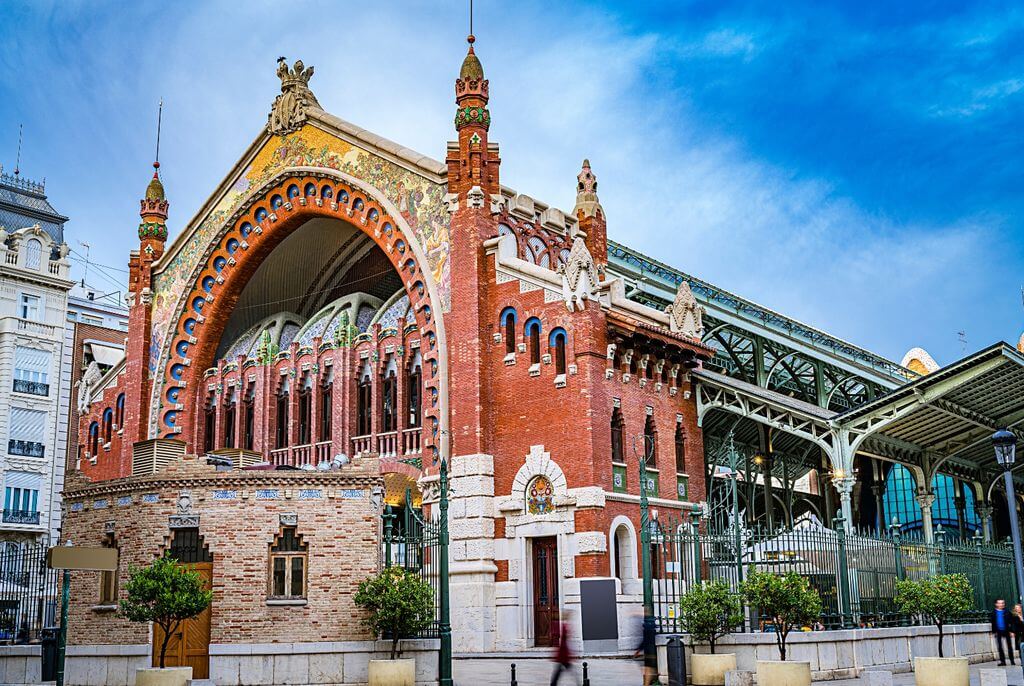
- Mercado Central
- La Lonja de la Seda
- Torres de Serranos
You could easily spend several hours simply wandering through this part of the city. The area around Plaza de la Virgen and Plaza de la Reina is particularly atmospheric, with terraces, historic buildings and small streets branching away in every direction. Do not try to see everything from a checklist. Valencia is a city that rewards walking, stopping for coffee and discovering places by accident.
Visit the City of Arts and Sciences
At the opposite end of the architectural spectrum is the City of Arts and Sciences | Ciutat de les Arts i les Ciències. This futuristic complex has become one of Valencia’s most recognisable landmarks. Designed principally by Valencian architect Santiago Calatrava, the complex includes several spectacular buildings devoted to science, nature, culture and entertainment. Highlights include:
Oceanogràfic
Europe’s largest aquarium, with more than 45,000 animals representing hundreds of species.
Museu de les Ciències
An interactive science museum where the emphasis is very much on experiencing and experimenting rather than simply looking at exhibits.
Hemisfèric
The distinctive eye-shaped building houses an IMAX cinema and planetarium.
Umbracle
An open-air landscaped walkway overlooking the complex. Even if you do not buy tickets for any of the attractions, the architecture alone makes the area worth visiting.
Our tip: arrive or leave via the Turia Gardens. The transition from green parkland to the futuristic white buildings is one of the nicest approaches to the complex.
Cycle through Valencia and the Turia Gardens
Valencia is one of the easiest large Spanish cities to discover by bicycle. The city is largely flat and has an extensive network of cycle routes. Its greatest advantage is the Jardín del Turia, created in the former riverbed of the Turia River. The park stretches for around nine kilometres across the city and is almost completely free of normal road traffic. Cycling through the Turia allows you to connect places such as:
- the historic centre
- Torres de Serranos
- several historic bridges
- Gulliver Park
- the City of Arts and Sciences
- eventually the marina and coast
We have explored Valencia by bike ourselves and still think it is one of the best ways to understand how the different parts of the city fit together.
👉🏻 Read our guide to cycling in Valencia
Discover Ruzafa
South of the historic centre lies Ruzafa, or Russafa in Valencian. Once primarily a residential neighbourhood, it has developed into one of Valencia’s most lively areas for:
- cafés
- independent restaurants
- cocktail bars
- vintage shops
- small galleries
- bakeries
- nightlife
At its heart lies Mercado de Ruzafa, a traditional neighbourhood food market. Ruzafa is particularly enjoyable later in the day. If you have spent the morning sightseeing around Ciutat Vella, this is a good neighbourhood for lunch, drinks or dinner. It feels noticeably less monumental and more residential than the historic centre, which is precisely why we like it.
Drink an Agua de Valencia
You are in Valencia, so there is one local drink you should at least know about. Agua de Valencia is a cocktail traditionally made with fresh orange juice, cava, gin and vodka. Despite the innocent-sounding name, it is definitely not water. The drink was created in Valencia in the second half of the twentieth century and has since become one of the city’s best-known local cocktails. You will find it in many bars around the historic centre, often served in a carafe to share. We have a separate article about its history, how it is made and where you can try it.
👉🏻 Discover the story of Agua de Valencia
Eat paella where it was born
Paella is associated with Spain all over the world, but its roots are Valencian. Traditional Paella Valenciana is very different from the seafood-heavy versions many international visitors expect. Classic ingredients include rice, chicken, rabbit, beans and saffron or local seasoning. And in Valencia, paella is traditionally much more of a lunch dish than an evening meal. If you want to understand where the dish really comes from, head south of the city towards L’Albufera Natural Park. The wetland is surrounded by rice fields that have played an essential role in Valencian cooking for centuries.
The village of El Palmar is particularly well known for its rice restaurants and is one of our favourite places to combine a boat trip through Albufera with a long paella lunch. Official Valencia tourism information describes Albufera as the birthplace of paella and specifically recommends combining the dish with the landscape, rice fields and traditional boat trips.
👉🏻 Discover the rice fields of Valencia and where paella comes from
Visit Albufera Natural Park
Even without the paella, L’Albufera deserves a visit. The protected wetland lies just south of Valencia and feels a world away from the city centre. Here you will find:
- rice fields
- wetlands
- birdlife
- traditional fishing
- small villages
- traditional wooden boats
A boat trip is one of the most relaxing ways to experience the area. Late afternoon is particularly beautiful, when the sun begins to drop over the water and rice fields. If you are visiting Valencia for just one day, Albufera may be too much to combine with the historic centre and City of Arts and Sciences. For a second visit to Valencia, however, we would put it high on the list.
Head to the beach
Valencia is unusual because you can combine a major city break with a proper Mediterranean beach. The best-known coastal areas include:
Las Arenas
Closest to the marina and lined with a broad promenade and numerous restaurants.
Malvarrosa
One of Valencia’s most famous urban beaches, with a wide sandy shoreline and plenty of facilities.
Patacona
Technically continuing into neighbouring Alboraya, Patacona has a relaxed promenade, cafés and beach restaurants and is particularly popular for long lunches and evenings by the sea.
For a first visit, we would not necessarily sacrifice the historic centre for an entire beach day. But if you are staying longer in Valencia or already know the main sights, the coastal districts show yet another side of the city.
Walk around the marina
Valencia’s relationship with the Mediterranean becomes particularly visible around La Marina de València. The area was extensively redeveloped around the time Valencia hosted the America’s Cup and today combines:
- sailing
- restaurants
- leisure areas
- modern architecture
- beach access
It is pleasant for a walk and easy to combine with Las Arenas or Malvarrosa. If you arrive at the City of Arts and Sciences by bicycle, you can also continue towards the marina and coast.
Experience Las Fallas
If you visit Valencia in March, the city can be almost unrecognisable. Las Fallas is Valencia’s most famous festival and has been included on UNESCO’s Representative List of the Intangible Cultural Heritage of Humanity since 2016. Hundreds of enormous artistic monuments ¨fallas¨ appear throughout the city. They often combine extraordinary craftsmanship with humour, caricature and political or social satire. The main celebrations take place from 15 to 19 March, culminating on the night of 19 March when the monuments are burned during the Cremà. Daily mascletàs take place at Plaza del Ayuntamiento from 1 to 19 March. Expect:
- enormous crowds
- fireworks
- marching bands
- traditional dress
- street parties
- lots of noise
- very little sleep
Fallas is spectacular, but if you prefer a peaceful introduction to Valencia, choose another week.
Which Valencia neighbourhoods are worth exploring?
If you have more than one day, it is worth looking beyond the main sights.
Ruzafa
Best for restaurants, bars, independent shops and a younger, creative atmosphere.
Ciutat Vella
The historic heart of Valencia and the obvious choice for a first visit.
Gran Vía and Ensanche
Elegant avenues, attractive architecture, restaurants and shopping just outside the historic centre.
Benimaclet
A more residential neighbourhood with a strong local and student character, small squares and a noticeably different atmosphere from central Valencia.
You do not need to visit all of them. Choose according to what you enjoy rather than trying to cross neighbourhoods off a list.
What should you see if you only have one day in Valencia?
If friends staying with us in Moraira asked how we would spend a first day in Valencia, we would choose something like: Historic centre · Mercado Central · lunch · Turia Gardens · City of Arts and Sciences If you enjoy cycling, do most of that route by bike.
👉🏻 Cycling in Valencia
If food matters more than museums, choose: Historic centre · Ruzafa · Agua de Valencia · long Valencian lunch
And if you have already visited the city before: Albufera · boat trip · paella in El Palmar · sunset
There is no single correct Valencia itinerary. That is precisely why the city is worth visiting more than once.
Valencia or Alicante from Moraira?
Both cities are worth visiting, but they offer different experiences. Alicante is closer to Moraira and easier for a relatively short day trip. Valencia is larger and offers considerably more in terms of historic architecture, major museums, neighbourhoods, modern design and gastronomy. If you have never visited Valencia, we think it easily justifies the longer drive.
From Moraira, the distance is around 120 kilometres and the journey normally takes roughly 1¼ to 1½ hours, depending on traffic and where in Valencia you are heading. For a full day, leave early.
More day trips from Moraira
Moraira is well placed between Valencia and Alicante, making it a comfortable base for discovering much more of the Costa Blanca and Comunitat Valenciana.
- Things to Do in Dénia
- Things to Do in Jávea
- Things to Do in Calpe
- Things to Do in Altea
- Things to Do in Guadalest
- Visit Alicante
Staying in Moraira?
Moraira Holiday Homes has specialised in holiday accommodation in Moraira and nearby Benissa Costa since 2004. Our collection includes private villas with swimming pools and sea views, as well as apartments and penthouses in Moraira town centre. Staying in Moraira gives you the relaxed atmosphere of a smaller Mediterranean town, while cities such as Valencia remain within reach for a day trip. Because we live locally, we are always happy to share ideas for places worth visiting during your stay.
👉🏻 Explore our holiday homes in Moraira
Frequently Asked Questions about Valencia
What are the best things to do in Valencia?
Highlights include exploring Ciutat Vella, visiting the City of Arts and Sciences, cycling through the Turia Gardens, discovering Ruzafa, eating paella and visiting Valencia’s beaches.
Is Valencia worth visiting from Moraira?
Yes. Valencia is very different from Moraira and offers historic architecture, major cultural attractions, shopping, gastronomy, beaches and the City of Arts and Sciences. Allow a full day for a first visit.
How far is Valencia from Moraira?
Valencia is approximately 120 kilometres from Moraira. Driving normally takes around 1¼ to 1½ hours depending on traffic and your destination within the city.
Can you visit Valencia in one day?
Yes, although you will need to choose what you want to see. For a first visit, combine the historic centre with the Turia Gardens and City of Arts and Sciences rather than trying to see the entire city.
Is Valencia easy to explore by bike?
Yes. Valencia is largely flat and has extensive cycle infrastructure. The nine-kilometre Turia Gardens provide an especially pleasant traffic-free route across much of the city.
What food is Valencia famous for?
Valencia is best known as the birthplace of paella. The region is also known for rice dishes, oranges, horchata and local Mediterranean produce.
Where should you eat paella in Valencia?
For a traditional experience, consider the coastal areas or visit El Palmar in Albufera Natural Park, surrounded by the rice-growing landscape closely associated with the origins of paella.
What is Agua de Valencia?
Agua de Valencia is a local cocktail made with orange juice, cava and spirits such as gin and vodka.
Does Valencia have a beach?
Yes. Valencia has several Mediterranean beaches, including Las Arenas and Malvarrosa, with Patacona continuing just north of the city.
When are Las Fallas in Valencia?
The main Fallas celebrations take place from 15 to 19 March, with the final Cremà on 19 March. Events and daily mascletàs begin earlier in March.
Is the City of Arts and Sciences worth visiting?
Yes. Even without entering the museums or aquarium, the architecture is worth seeing. Families may particularly enjoy the Science Museum and Oceanogràfic, which is Europe’s largest aquarium.